Peer Review
Reviewing and Production Process
Each submission undergoes a preliminary check before being sent for review. A detailed double-blind peer review, along with editorial considerations, plays a key role in determining their publication. If the manuscript is accepted, it will either be revised in line with the reviewers’ suggestions or directly sent to the proofreading stage, in which it is readied for typesetting before being translated into German or English.
The Editorial Process is illustrated here.
Note: While reviews can be submitted in both English and German, we ask bilingual reviewers to write in the same language as the manuscript under review.
Overall Aims
The primary aims are to enhance the quality of peer reviews through ethical and professional conduct, support journals and editors in guiding their reviewers effectively, and educate researchers and institutions on best practices in peer review. By adhering to these principles, peer reviewers uphold the credibility, fairness, and rigor of academic publishing.
Responsibilities of Peer Reviewers
Before accepting a review
Reviewers should respond promptly to review requests, confirming or declining in a timely manner, especially if they cannot complete the task. They must ensure they have the expertise required to assess the manuscript and the availability to deliver their review within the agreed timeframe. Any potential conflicts of interest—personal, financial, or professional—must be disclosed upfront, such as working at the same institution as the author or recent collaborations. Reviewers should also decline to review manuscripts that closely align with their own ongoing work or if the journal’s peer-review model (e.g., open or blind) may hinder their ability to provide an unbiased assessment.
During the review process
Reviewers are expected to maintain strict confidentiality, refraining from sharing or discussing the manuscript with others unless explicitly authorized by the journal. Feedback should be constructive and aimed at improving the manuscript, avoiding any hostile or derogatory comments. Ethical concerns, suspected plagiarism, or conflicts of interest that arise during the review process must be reported to the journal. Reviewers must not misuse information from the manuscript for personal advantage or intentionally delay the process. If involving a junior researcher, they must obtain approval from the journal and appropriately credit their contribution.
Preparing the review
Feedback should be specific and supported by clear, evidence-based references, identifying both strengths and weaknesses of the manuscript. Suggestions should focus on enhancing clarity and quality without rewriting the paper to fit the reviewer’s personal style. Reviews must avoid biases related to the authors’ nationality, gender, affiliations, or commercial interests and should focus solely on the academic merit of the work. Comments should critique the work itself rather than making personal criticisms or including unjustified accusations.
Post-review obligations
After submission, reviewers must continue to maintain confidentiality regarding the manuscript and the review. They should respond promptly to any follow-ups or requests for clarification from the journal. If new insights relevant to the manuscript arise after submitting the review, reviewers should inform the journal promptly.
Guidance for ethical practices
Reviewers should engage in the peer-review system proportionately to the support they receive as authors, upholding reciprocity. Suggestions for citations or alternative reviewers should serve valid academic purposes rather than personal gain. Transparency is essential; reviewers who act as editors or handle manuscripts under blind review should disclose their dual roles to maintain trust.
Review Acknowledgement
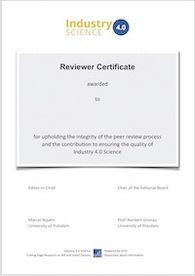
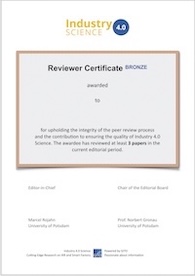
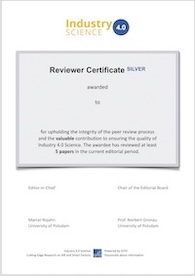
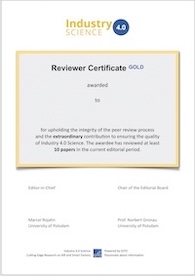
In addition to gaining free access to our paid content for one year, reviewers are eligible for a certificate confirming their contribution:
1 review = basic certificate
3 reviews = bronze certificate
5 reviews = silver certificate
10 reviews = gold certificate